Technical guides
How to Measure Hose Assembly Length Correctly
Hose assembly length is measured differently depending on the fitting: straight, elbow, flange or O-ring face seal. Measure the wrong way and the assembly arrives too short.
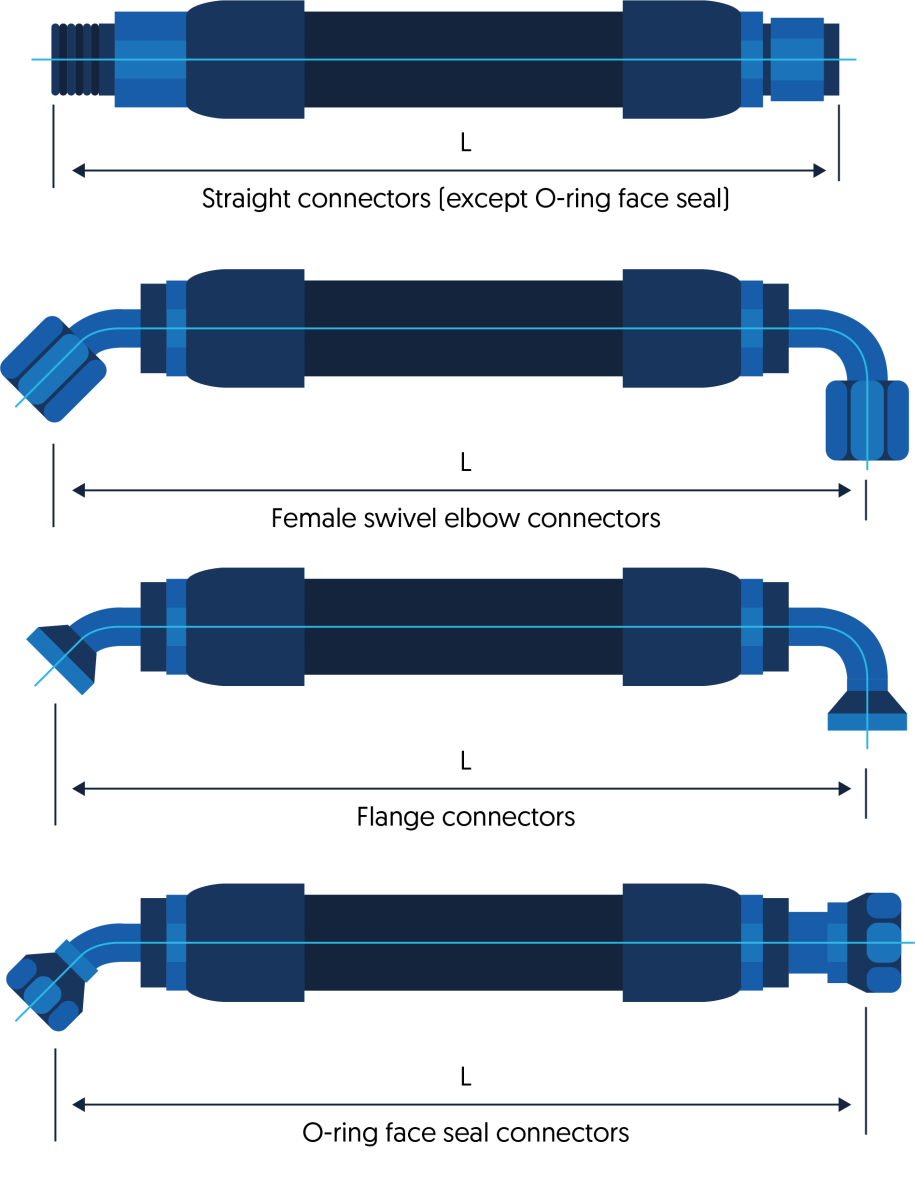
Mismeasured length is the most common reason a replacement assembly does not fit. The length of an assembly is not one number measured one way: it depends on which fittings are on the ends.
With fitting and without fitting
First decide what you are measuring. Cut length is the length of the hose before the fittings are attached. Overall length is the finished assembly including both ends. When you order, say which one you mean.
Straight fittings on both ends
This is the easy case. With straight connectors, the overall length is measured face to face along the centre line of the assembly.
Elbow, flange and O-ring face seal fittings
Once an elbow is involved, the measurement point moves. For female swivel elbow connectors the length is taken between the two defined reference points, not the outside of the bend. Flange connectors and O-ring face seal connectors each have their own reference point as well.
If you are unsure which case applies, send a photo of both ends next to a tape measure and tell us the fitting type. We will confirm the drawing before production.