Technical guides
How to Choose the Right Hose: Remember S.T.A.M.P.S.
Six details decide whether a hose works: size, temperature, application, media, pressure and standard. Ask for them in this order and the quotation matches the job.
Most buyers know the machine and the failure they want to fix, but not the six hose details that decide whether the replacement works. Remember S.T.A.M.P.S. before you order: Size, Temperature, Application, Media, Pressure, Standard.
Size
The bore size is the first thing we need. If the original printing has worn off, the old hose has to be cut and the inside diameter measured with a caliper. Give us the inner diameter, and where possible the outer diameter and the wall thickness.
Temperature
There are two temperatures. Ambient temperature is the air around the hose where it is installed. Media temperature is the temperature of the fluid inside while the machine works. Both matter, and the hotter of the two decides the tube compound.
Application
How will the hose be used? Tell us the equipment type, the environment, whether the assembly needs permanent or field-attachable fittings, whether the routing is confined, and whether the hose will rub against a surface. Where abrasion is the failure mode, we change the cover compound instead of asking you to add a sleeve later.
Media
What the hose carries decides the tube. Hydraulic oil, petrol, diesel, water and air each behave differently, and some applications need specialised oils or chemicals. Compatibility has to cover the tube, the cover, the fittings and the O-rings, not only the tube.
Pressure
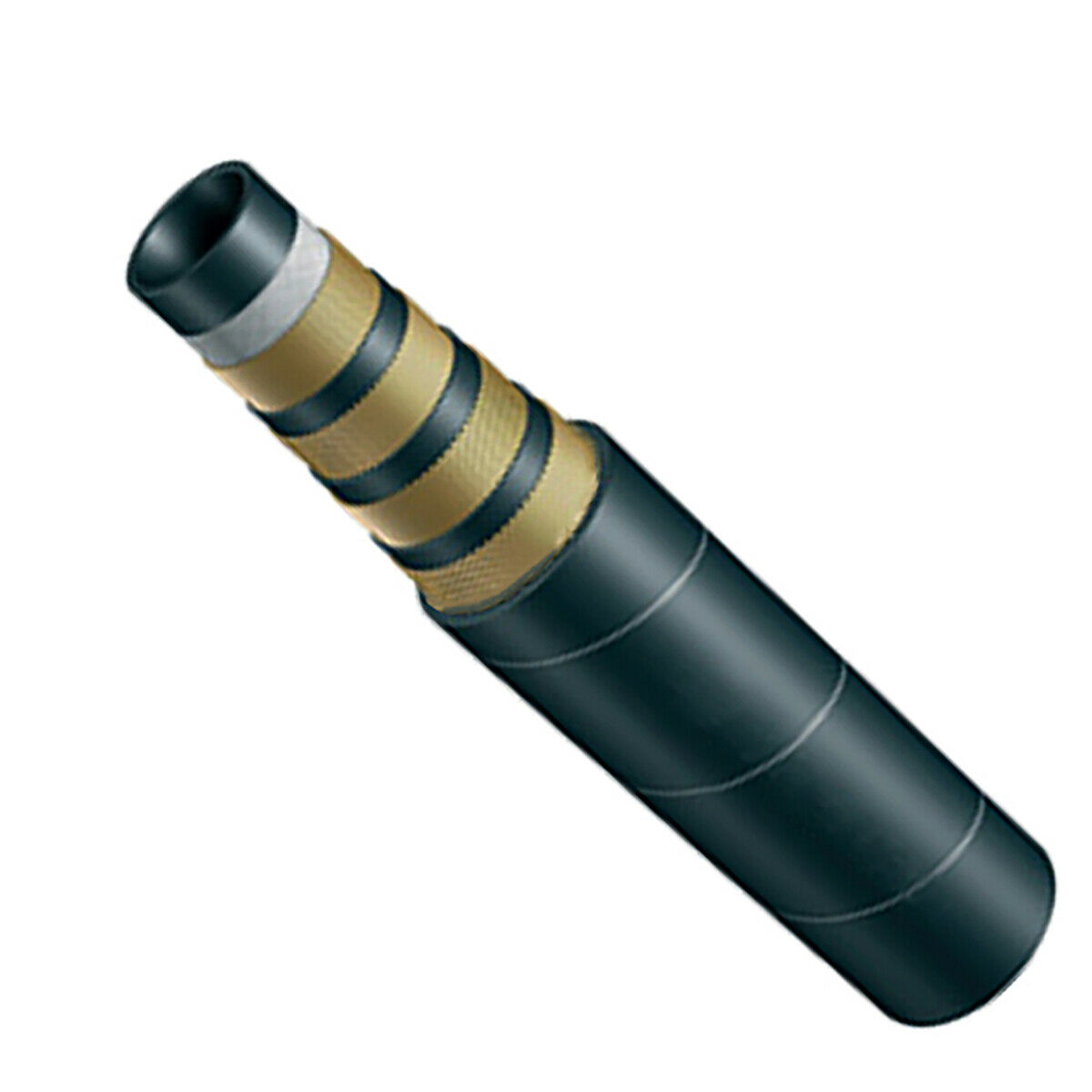
Give us the system working pressure and, if you have it, the surge and peak pressures. The published maximum working pressure of the hose must equal or exceed the maximum system pressure, and any surge or transient peak must stay below that published rating. If the working pressure is unknown, cut a short section and send a clear photo: the reinforcement layers tell us which construction the hose is.
Standard
The standard is usually printed on the tube. Quoting the standard is the fastest way for us to identify the hose you need. The common prefixes are SAE (Society of Automotive Engineers), EN (European Norm), DIN (Deutsches Institut fur Normung) and ISO (International Organization for Standardization).
Send the six details and we confirm the matching hose, fitting and assembly option.